General frame: dwelling place and post-death existence state
The post-death life of a Spirit (Ghost) must first be read as two separate things: where it dwells, and what kind of days it lives. Possession is only a dwelling place, and also a survival relation. It is not itself purgatory, and it does not by itself announce a Spirit (Ghost)’s final destination.
Most of what we meet sits at the intersection of possession as dwelling and a purgatory-like state.
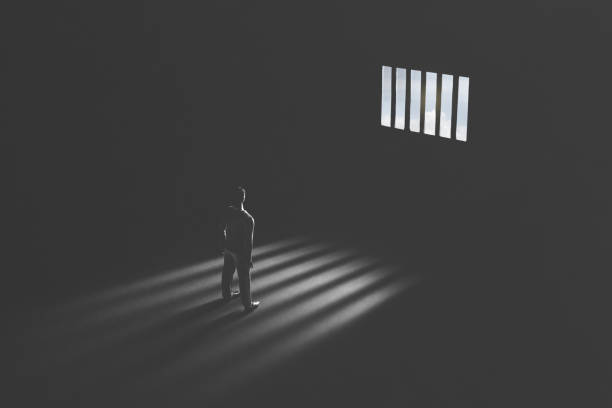
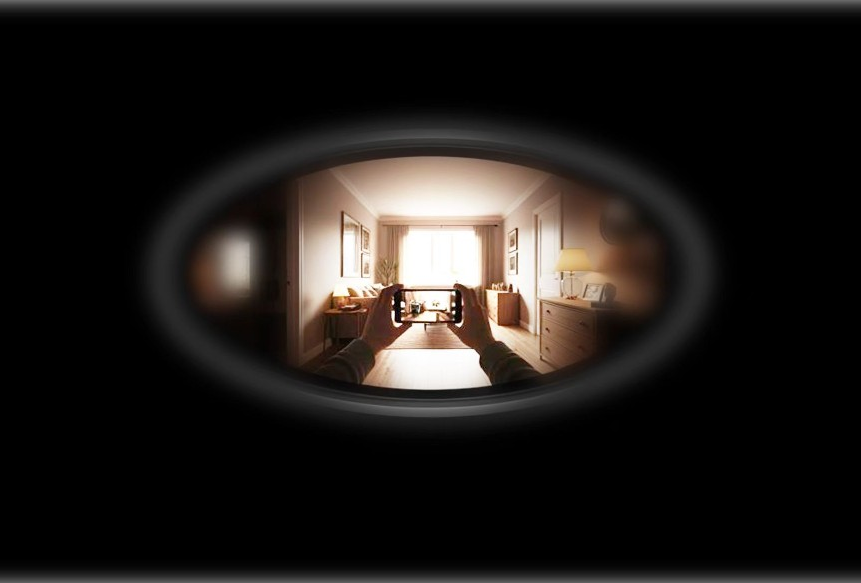
From a pastoral view, see the Spirit (Ghost)’s lost state first. They are not only energy-taking and illness-causing. They have lost the flesh, are cut off from one another, and find that the afterlife picture they believed in life did not happen. Many therefore do not believe—or do not know—that God still is, and that the Holy Spirit still governs. Lack, enclosure, and ignorance are major backgrounds for harm to the host. Possession says where it temporarily lives; purgatory-like, partial hell-like, and near-heaven say what kind of days it lives.
Section I covers shared traits of Spirits (Ghost). Section II covers non-natural settings under Holy Spirit revelation. Section III records Minister Wu’s observations of American Spirits (Ghost) after receiving grace. The American sample is not a worldwide standard.
I. Shared traits of Spirits (Ghost) across humanity
Numbering note: This section uses “CS-##.” CS = Character of Spirit (Ghost).
After death a Spirit (Ghost) often first enters a lost state: post-death reality is fully cut off from the world it knew in life. Those who believed in rebirth ask: Why did I not reincarnate? Why am I still possessing and waiting? Those who expected heaven or hell to appear at once ask: Why have I entered neither heaven nor hell? Those who believed atheism and post-death nothingness ask: If I am already dead, why do I still exist?
For thousands of years religions have spoken of the afterlife without systematically revealing this state. The gap breeds confusion and disappointment, and makes denial of God and governance easier. Part of a Spirit (Ghost)’s time stays in ethereal space—low metabolism, almost no outer world. Part of its time enters a human body to take energy and borrow the host’s senses and thought. The former deepens isolation; the latter makes the host its only visible resource and exit. From there it takes energy, lodges, and produces fear—often without first knowing this as harm. Ignorance does not cancel consequence, but it shows why shepherding cannot be only expulsion.
A Spirit (Ghost) is not a full copy of the human body. After death it mainly carries the spirit-brain, energy supply, conscious thought, emotion, and part of the remote-interaction system. It does not carry muscle, skin, limbs, digestive organs, the blood system, or other organs that depend on flesh. So it can no longer independently see, hear, eat, sleep, or walk as a living person does.
Its bodily material is ethereal matter. In the ordinary state it has no normal refractive index, is usually invisible to the naked eye, can pass through most ordinary matter, and yet has cohesion as a distinguishable individual. After leaving the body it is mostly transparent ethereal matter. In ethereal space, regular forms may be spherical, spiral, or bead-like; irregular forms may be white or black shadows. It has no facial features, fixed human appearance, clothes, or limbs, and can no longer recognize itself by its living face.
After possession, a Spirit (Ghost) does not shrink to a point inside one organ. It spreads as a whole-body distribution inside and out: part inside the host, part outside, and it may also overlay clothing, bedding, a house, or another subject. The common state is a high-density mass with a low-density mist-like fringe. It draws energy from sites such as the central nervous system, reproductive organs, kidney, liver, and stomach; the site shapes the host’s mental state and bodily presentation.
A Spirit (Ghost) has no eyeballs, ears, skin receptors, taste receptors, or pain receptors, and cannot independently perceive physical reality the way a human does. That does not mean it has no conscious experience at all. It may receive implanted vision, hearing, touch, taste, and pain from an SMS or the spirit management system; while possessing a body, it may also borrow sensory information the host has already formed. In ethereal space it is often near sensationless; only when it enters a body does it regain a limited window on the outer world.
A Spirit (Ghost) no longer takes meat, vegetables, bread, or other food, yet still needs energy and material metabolism. Ordinary Spirits (Ghost) mainly depend on parasitizing a human body. A Spirit or Saint Master Spirit that has entered heaven and is supplied by the Creator’s spirit management system does not need to parasitize. Spirits (Ghost) have no appetite or greed for money, yet they still have a need to survive.
Spirits (Ghost) do not reproduce by birth. They have no human-style sexual desire and no physiological sex difference, but may retain gender identity from life.
At death a Spirit (Ghost) can separate from flesh made of atoms and molecules, so it can pass through walls, furniture, and floors, and linger in them. It remains caught in the cracks of the created world, not yet come to rest in heaven.
A Spirit (Ghost) has no legs, feet, bones, or muscles, and cannot walk as a living person does. It drifts its ethereal body by intention.
A Spirit (Ghost) has no human-style sleep, yet it shifts between two stays. Part of the time is in the ethereal world: metabolism extremely low, near standstill, no outer world felt. Part of the time it enters a human body to take energy and borrow the host’s senses and thought. After entering a body it often also cycles through low-metabolism rest, accumulating energy, activity or episode, depletion, then rest again.
The above extends the basic definition that a Spirit (Ghost) leaves the flesh and becomes an independent living being. What follows is revelation from the Holy Spirit.
II. Holy Spirit revelation: non-natural settings and remaking
The physiology and existence state of a Spirit (Ghost) are not the natural continuation of a person’s spirit body in life. As a conscious living being, a Spirit (Ghost) is set and remade by the Creator’s spirit management system. Purgatory is not unordered drifting; it is a managed intermediate state.
- Ethereal matter has quantum effects. The spirit management system and Spirits (Ghost) are not always bound by physical space; in physical space they may show quantum nonlocal effects.
- The system gives Spirits (Ghost) the trait “mortal yet non-aging.” Ordinary Spirits (Ghost) generally survive from a few hundred years up to about two thousand years. An SMS is not bound by that number.
- After a person becomes a Spirit (Ghost), thinking ability and memory often no longer decline with bodily old age; personality from the corresponding age stage may remain.
- Children under ten often cannot naturally become Spirits (Ghost), because the spirit body is not yet fully developed in life. Child-type Alters in DID often have adult comprehension; they are non–post-mortem spirits deliberately made by the Creator, and must not be confused with Spirits (Ghost) formed by natural human death.
- The Creator made angels. Angels are not Spirits produced by natural human death. The Creator may also remake ordinary post-mortem Spirits (Ghost) into a Saint Master Spirit or a hybrid spirit to help manage humanity and ordinary Spirits (Ghost).
- Spirit (Ghost) environments have multiple upper and lower layers—both spatial and capability layers. A lower Spirit (Ghost)’s thought can be transparent upward; a superior spirit can give commands and thought control.
- The ethereal world has multiple sub-spaces. The primary sub-space overlaps the physical world and is often dark. After possession, a Spirit (Ghost) can basically exist in four quadrants: ethereal and physical worlds inside the body, and ethereal and physical worlds outside the body.
- After death the system adds capacities living people did not have—for example sensing possessing spirits on other people, and a markedly strengthened RPO function.
- Psychological traits can be systematically removed or rewritten. Hatred, selfishness, and greed may be weakened; love may still remain. A Spirit (Ghost) in a purgatory-like state after possession may also be given depression, anxiety, loneliness, and fear—or positive emotion. This is the management system’s reward, punishment, and purification.
III. Observations from the American sample
The following comes from Minister Wu’s contact with American Spirits (Ghost) after receiving grace. It describes ordinary possessing Spirits (Ghost) in the United States and must not be treated as a single worldwide standard.
Numbering note: This section uses “CS-US-##.” CS = Character of Spirit (Ghost); US = American sample.
In in-depth interview cases, each host with a psychiatric disorder averages about two possessing spirits; multi-spirit possession exceeds 50%. Through SMS notice, the possession rate among ordinary North Americans is about 40%, and multi-spirit possession about 10%. Macro rates and deep-dialogue samples must be used separately.
Main organs of ordinary American possessing Spirits (Ghost): memory organ, energy-supply organ, consciousness-thinking organ, emotion organ, and Remote Port Organ (RPO). A few may also form consciousness tentacles. Thinking and emotion organs often adhere and form the sample’s “Spirit (Ghost) brain.”
Basal metabolism is very low—often near meditation, half-sleep, time almost stopped. A Spirit (Ghost) may stay long in ethereal space, or after possession cycle through low-metabolism rest, accumulating energy, episode, depletion, then accumulate again. Possession is not continuous episode.
There is intake and metabolism, but no independent excretory system. Metabolic waste must leave through the host’s spirit-body system, which can increase gastrointestinal and excretory burden and produce somatic signs in step with psychiatric or mood episodes.
Most ordinary American Spirits (Ghost) cannot find and possess a host on their own; they are mainly sent in by an SMS. If not sent in, they often fade naturally. So-called “candlelight” guidance is not light seen with eyes, but a guiding thought-instruction written by the spirit management system.
Most ordinary American possessing Spirits (Ghost) lack a full pre-death memory; they may forget full name, time of death, lifespan, and gender. After changing hosts, possession-period memory may also be lost. East Asian reports of Japanese spirits more often keep memory—memory parameters may differ by region.
In the North American sample, nearly every Spirit (Ghost) that can dialogue speaks English; verbal hallucination is usually short phrases, and long output is limited by the management system. Non-verbal thought insertion is more common. Multiple Spirits (Ghost) in one host can communicate through the host’s brain; ordinary Spirits (Ghost) in different hosts usually cannot communicate freely.
Thought tends to be simple. It lacks the complex planning motive humans form for survival and reproduction.
Appendix: Possession is not purgatory; being possessed is not being punished
I. Dwelling place and existence state
Keep two questions apart: where a Spirit (Ghost) lives, and what kind of days it lives.
Dwelling places are three: ethereal space (including long isolation like the abyss of folklore); human possession; and lingering in physical space such as houses, hospitals, or gravesites.
Existence states have three biases:
- Purgatory-like. Most common. An ordinary Spirit (Ghost) is like living in the dark room of a human body, with limited energy, looking out only through the small window of the host’s thought and senses—long hardship and waiting, yet still open to purification and return. The length of purgatory time assigned by the Creator differs by the degree of sin in life.
- Partial hell-like. Not only a place, but a state already carrying hell-like elements. Some may possess animals or humans yet suffer long depression, despair, loneliness, and fear; some are discarded in ethereal space, cut off from the outer world and supply, awaiting death and gradual dissipation—the latter dwelling resembling the abyss of folklore. Partial hell-like must not be mixed with ordinary purgatory-like states still open to purification.
- Near-heaven. Some Spirits (Ghost) still possess, yet have been remade into deep joy—even more joy than the living. Joy can be set directly by the Creator, like a parameter; a child’s carefree joy is itself a settable state. By the same principle, a Spirit (Ghost) can be set in peace, joy, and contentment. It remains in body-related space, yet not in purgatory-like hardship.
Most Spirits (Ghost) we meet sit at the intersection of human possession and a purgatory-like state.
For thousands of years Christ’s system of sin and judgment has been present everywhere, governing all humanity.
II. A common question: I’ve been possessed—am I being punished?
The precise answer is: No. Being possessed does not mean you are being punished.
Keep the two sides separate:
- The Spirit (Ghost)’s side. It may possess a human or an animal, or stay in ethereal space. Being given negative emotion or bans is what purgatory-like, partial hell-like, near-heaven, and reward-and-punishment talk about.
- The host’s side. Fear, depression, hallucination, or bodily discomfort may come from energy-taking, lodging, shared emotion, and metabolic burden after a Spirit (Ghost) lodges. That is a consequence of the lodging relation—not a verdict that says “you are guilty, so you are punished.”
Possession is fluid. Much possession is silent: a Spirit (Ghost) lodges, illness does not necessarily follow, and the person may not know at all. A structure this common cannot be read as “you were punished” merely because possession occurred.