The spirit-brain is a complete organ system
The human brain is not only the flesh brain of neurons; it also includes a spirit-brain.
The spirit-brain both carries out functions such as thought, consciousness, and memory, and bears those functions themselves—a dual property of software and hardware in one.
The spirit-brain is the main subject of human thought and consciousness.
The flesh brain supplies energy and material support to the spirit-brain.
After death, the spirit-brain can leave the flesh body and keep existing; the flesh brain, once lifeless, decays.
A Spirit (Ghost) after leaving the flesh body is still a living being with independent thought.
The spirit-brain can exist independently of the flesh brain; the flesh brain must depend on the spirit-brain to keep vitality.
The complete spirit-brain includes seven functional organs:
- The screen consciousness-control center at the center of the flesh brain—the 3D brain screen;
- The thinking organ near the screen consciousness center;
- The consciousness control and transmission center in the flesh heart and trunk region, working in a bubble-gun mode;
- The long-term memory organ in the spirit-world cloud;
- Emotion organs distributed at different body sites;
- The system that controls personality and expression of ancient evolutionary psychology;
- The organ responsible for partial spirit-brain and spirit-body growth and repair.
The seven parts together form one complete information chain.
The 3D brain screen only handles current-consciousness information exchange; it cannot replace thought generation, emotion gathering, long-term memory, evolutionary-psychology expression, or growth and repair.
Each part has an irreplaceable function; the whole spirit-brain cannot be reduced to one 3D brain screen.
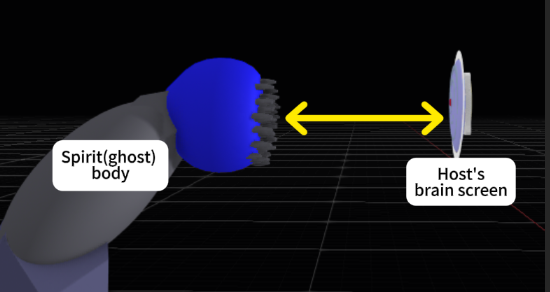
This chapter discusses only the four equal-rank organs in the flesh-brain region.
Spirit-brain organs at the heart, trunk, and other body sites are covered elsewhere (cross-ref in source: “Knowledge Base 2”).
The distal long-term memory body belongs to the full-system map and interfaces; its structure and operating mechanism are not developed here, but in Third Deliverance files.
Where this knowledge comes from
Ordinary spirits that take part only locally in human activity can only sense and describe local phenomena; they cannot from that reconstruct the full spirit-brain structure. A Saint Master Spirit also does not necessarily hold systematic knowledge.
Most advanced spirit beings in the spirit world are more like technicians ranked by skill; they do not depend on systematic knowledge for survival.
The complete structure in this chapter comes from Holy Spirit revelation, organized and checked by Minister Wu after receiving grace (see the note at the head of this text).
Anatomical distribution: three sites, two spaces
The spirit-brain occupies both the real world and the spirit world.
More than 90% of the spirit-brain lies in the spirit world; about 10% overlaps the real flesh body through a portal and draws energy from the flesh.
Different spirit-body organs do not share the same proportion across the two spaces.
For example, meridians are also spirit-body organs; about 30% of their structure is in the real flesh body, about 70% in the spirit world.
This distribution means spirit-brain information processing is not limited to the cranial cavity.
The flesh-brain site handles current consciousness and thought processing; the heart and trunk site handles another set of consciousness, emotion, and transmission functions; the distal site handles long-term memory storage.
The three sites exchange information through fixed interfaces.
Spirit-brain structure: four equal-rank organs at the head site
The 3D brain screen handles current-consciousness input and output.
The thinking organ generates, synthesizes, and checks thought.
The emotion-connection terminal sends heart-region emotion into the thinking process.
The growth and repair organ handles partial growth and repair of spirit-brain and spirit body.
The four stand at the same level.
They form a cooperative system through interfaces, but no one organ can replace the other three.
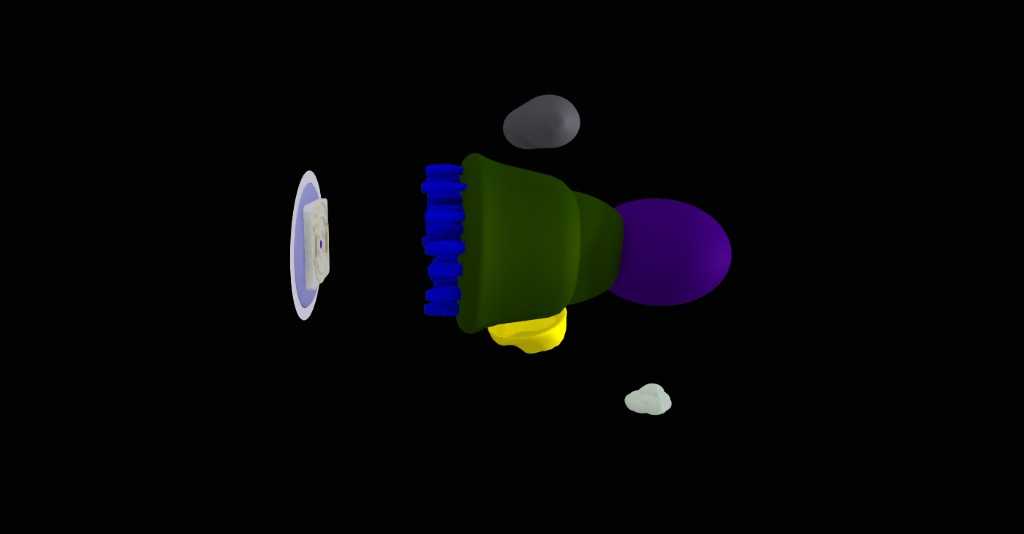
3D brain-screen consciousness-control center
Basic form
The 3D brain screen is a two-faced spatial organ.
The face-ward side is usually oval or round—oval for most people; the occiput-ward side is usually a rounded rectangle, oval in a few people.
Both faces can output images.
The screen is not flat; both sides have ripple-like protrusions.
Different protrusions correspond to different function modules—hence “3D brain screen.”
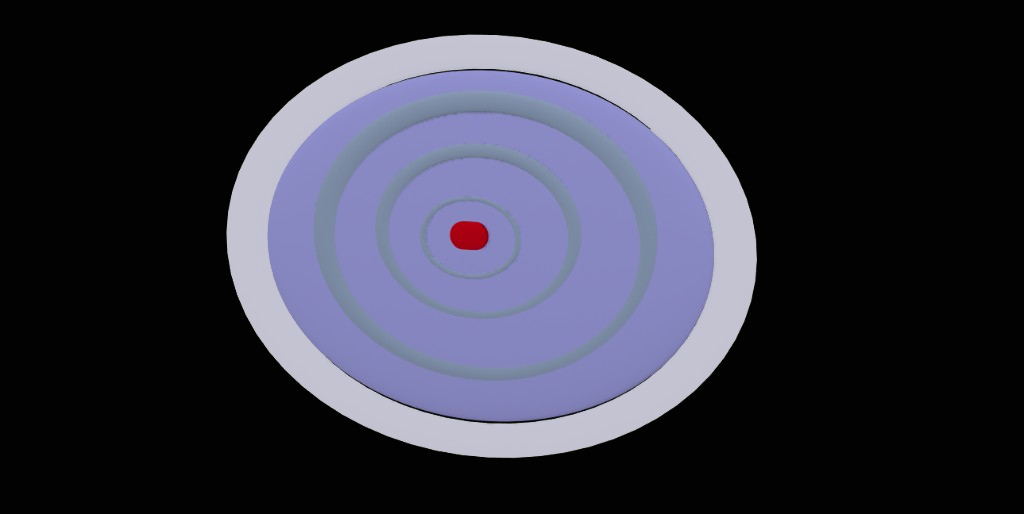
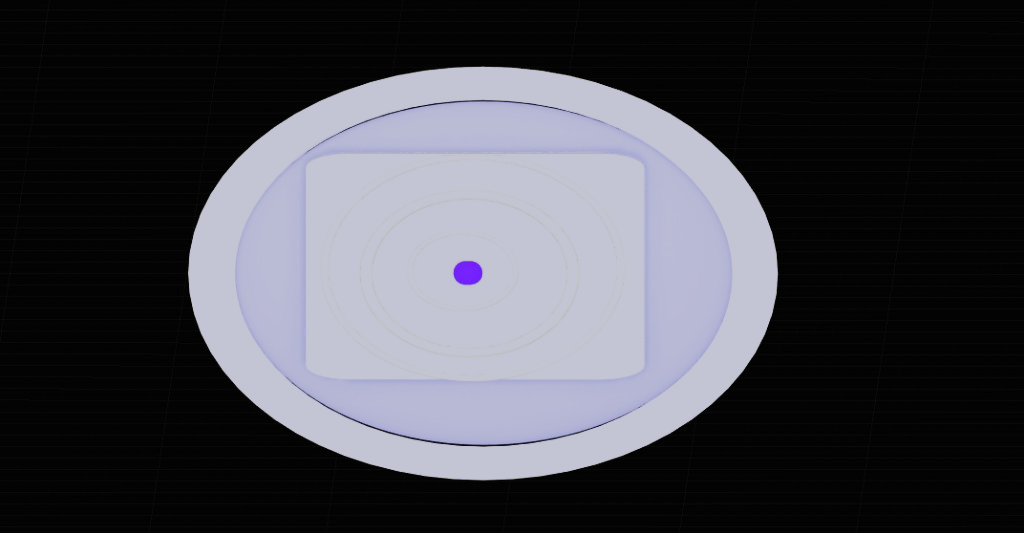
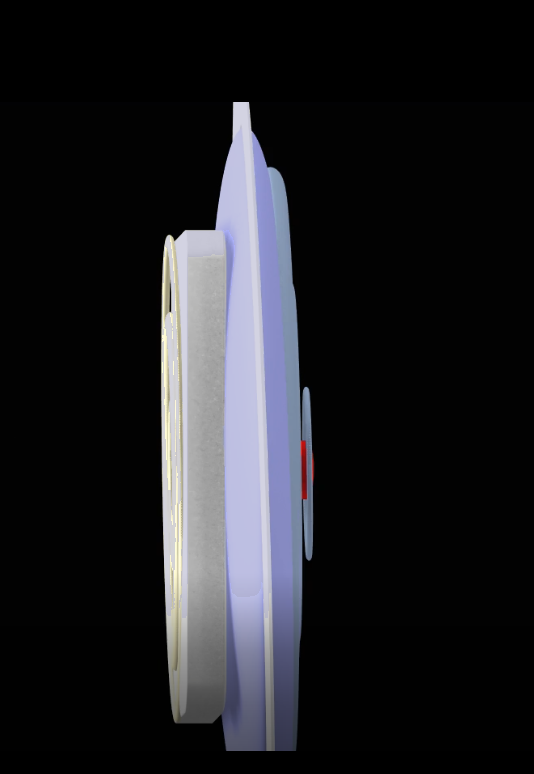
Screen size shows clear individual differences.
Smaller ones approach a 500 ml bottle-cap size; larger ones approach a cross-section of an egg.
Brightness also varies; the two faces can differ, and the forehead-ward side is darker in many individuals.
About 90% of the 3D brain screen lies in the primary VR subspace next to the real world; about 10% overlaps the real flesh brain.
The overlap is near the center of the flesh brain, around hippocampus and pineal.
Two-faced images and real-world vision
Real scenes seen through the eyes appear in real time on the 3D brain screen.
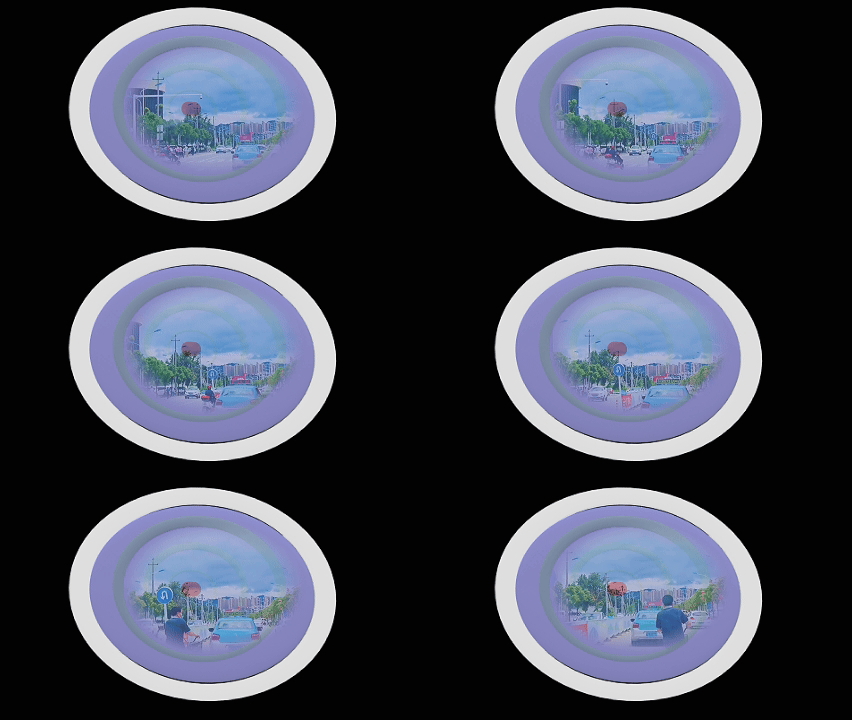
Real visual information can form images on the 3D brain screen in spirit space, without needing active thinking.
Screen images involve light in their constitution.
When images disappear, consciousness signals continuously exchanged through the screen weaken—so light not only forms images, but may also take part in consciousness construction and coding.
Information interface between screen and heart
One face of the 3D brain screen has a small square interface leading to the consciousness center in the heart region.
The heart region has a matching square interface.
Information output from the brain screen to the heart passes along this pathway.
It is the normal consciousness-transmission interface between flesh-brain and heart sites.
External-information sensing module
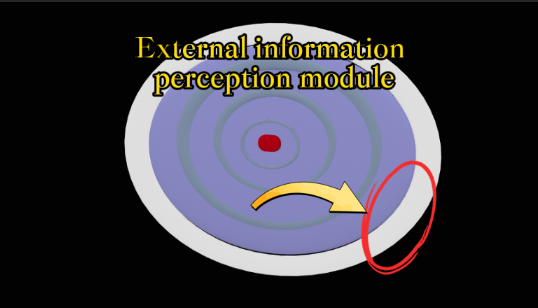
Outside the face-ward oval face is a darker ring called the external-information sensing module.
Vision, hearing, and body-site sensing arrive here.
This module feeds different sensory channels into current consciousness.
Consciousness-output module
Both faces of the 3D brain screen as a whole carry consciousness output.
Output includes
Self-awareness and awakening module
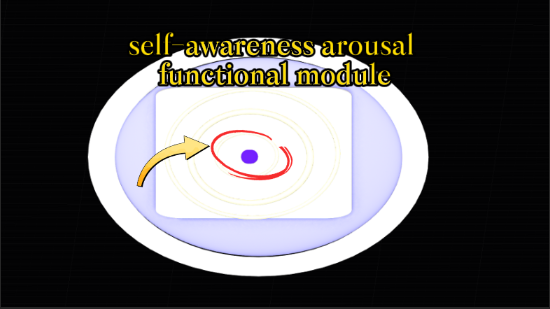
At the center of the screen is a self-awareness and awakening module.
It takes part in normal or controlled state changes such as waking, sleep, hypnosis, anesthesia, and coma.
Long-term memory download port
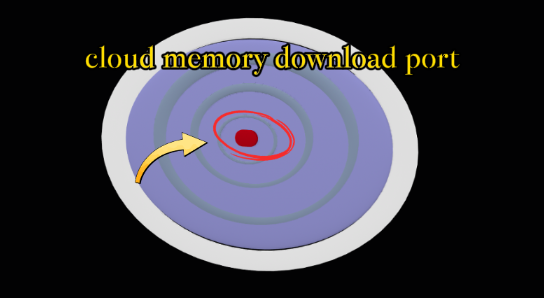
At the center of the oval face is a port for downloading information from the distal long-term memory body.
The long-term memory body is not in the flesh body’s space, so recall requires transmission between the distal memory body and the 3D brain screen.
This chapter keeps only this interface relation.
Detailed structure, storage mode, and long-term operation of the distal long-term memory body are explained in Third Deliverance files.
Short-term memory module
The 3D brain screen also includes a short-term memory module, like CPU memory, storing information current consciousness is processing.
Overall, the 3D brain screen is the data-exchange center for current-consciousness input and output.
It is one link among the seven organs; it does not independently generate all thought, emotion, and long-term memory.
Thinking organ
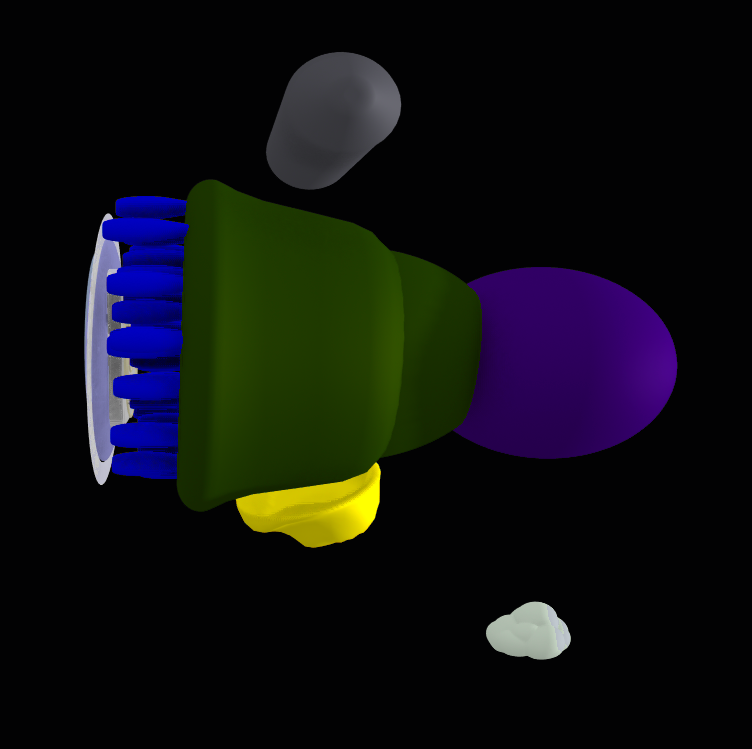
The thinking organ lies behind the 3D brain screen and has three parts:
- Consciousness-generation organ — purple bulb of the gourd (produces the initial idea);
- Information synthesis and reprocessing organ — green gourd body (forms complete consciousness and language);
- Check and verification organ — grey rod beside the gourd (keep / revise / delete).
The generation organ and the synthesis/reprocessing organ join as one, shaped like a gourd.
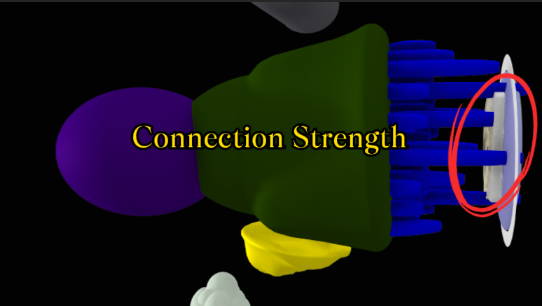
The gourd bottom is near the 3D brain screen; between them are many octopus-tentacle-like consciousness-interaction ports (blue rods in the figures).
The check organ sits beside the gourd body, shaped like a rod.
It continuously checks consciousness already generated and being synthesized.
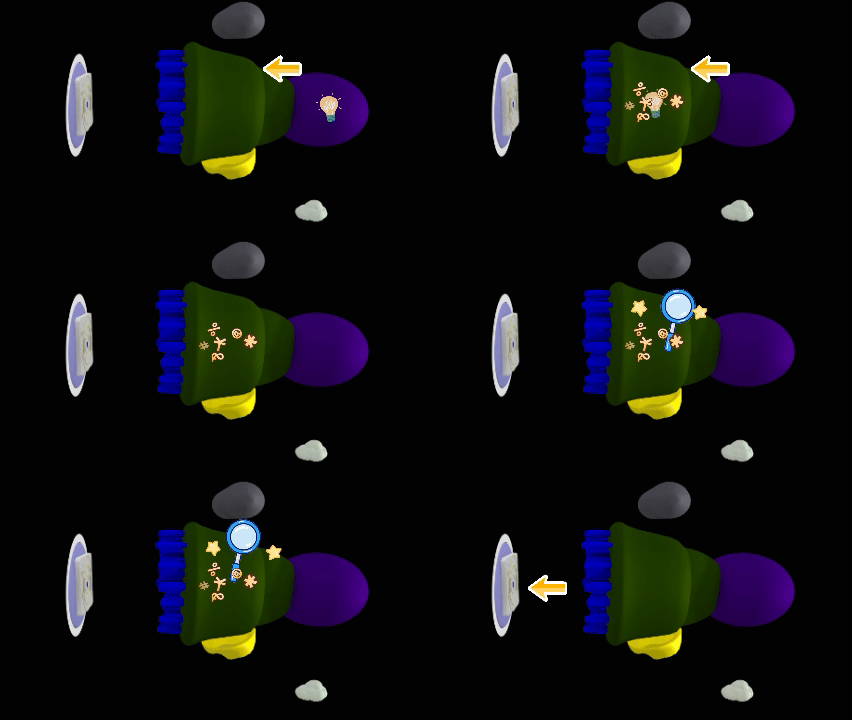
Thought-generation process
- 01GenerateConsciousness-generation organ produces the initial idea
- 02SynthesizeSynthesis / reprocessing organ forms complete consciousness and language
- 03CheckCheck organ judges: keep, revise, or delete
- 04Enter screenQualified consciousness or language enters the 3D brain screen
- 05OutputOutput outward through the screen
Short-term cache
Inside the gourd-shaped thinking organ is also a short-term memory cache, like CPU memory, supplying temporary information for thought generation and language synthesis.
Self-subject and habits
The thinking organ can cognize the self-subject and retain self habits.
It lets a life know that “the ego exists” and “I am a living being,” but need not store basic identity such as name or sex.
This small consciousness module decides in which organ the life-subject sits.
Wherever it is, the life-subject is there.
Thinking organ and waking state
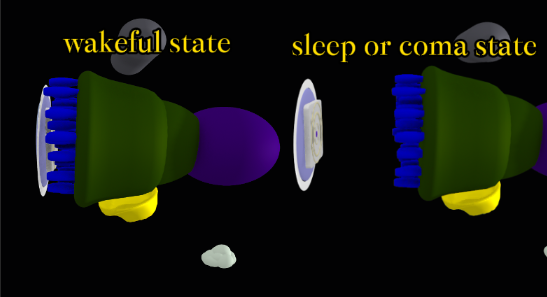
When the thinking organ connects to the 3D brain screen, the person is awake.
When they separate, the person enters sleep or coma.
This is the basic state switch between the thought-generation system and the current-consciousness exchange system.
Emotion-connection terminal
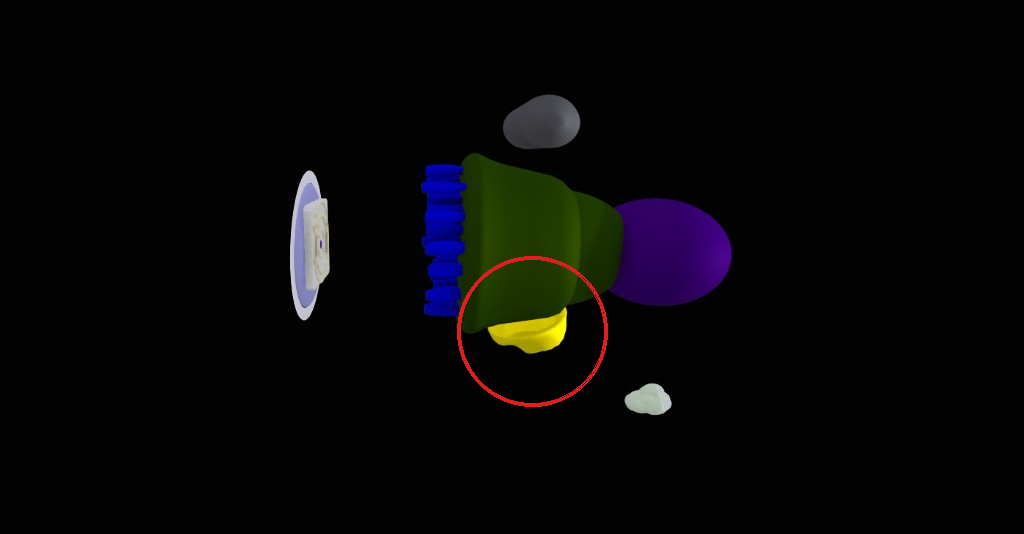
Below the thinking organ is a sheet-like emotion-connection terminal.
It connects to the emotion center in the heart region.
Emotion produced and gathered at the heart and other body sites passes through this terminal into the flesh-brain region and takes part directly in thought generation and information processing in the thinking organ.
It is not an appendage of the 3D brain screen, but a necessary interface between the heart emotion system and the flesh-brain thinking system.
Normal thinking processes not only sensation and language, but also needs this pathway to input emotion information.
Partial spirit-brain and spirit-body growth and repair organ
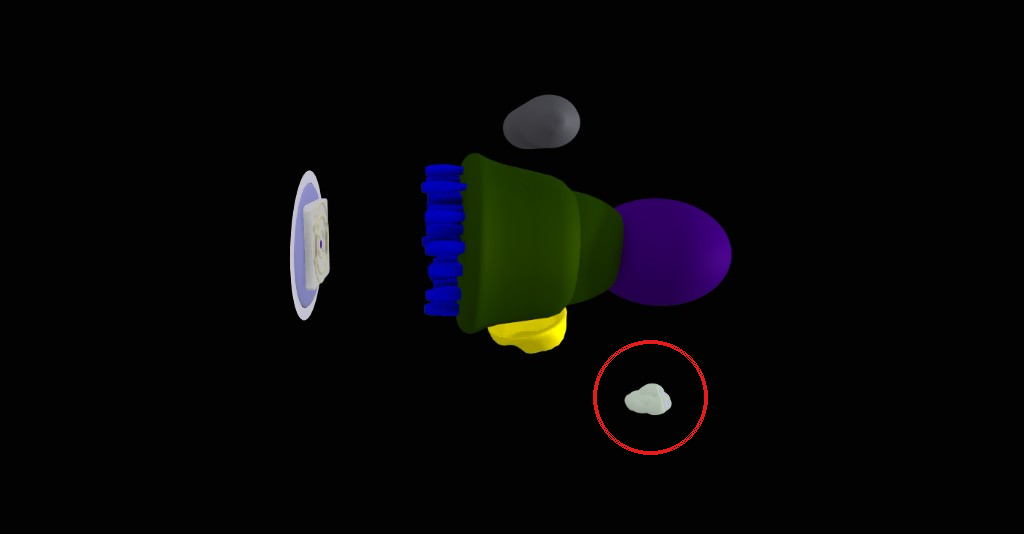
Below the flesh-brain region is also a pale, cloud-like, irregular organ.
It handles part of spirit-brain and spirit-body growth and repair.
The main generation and repair organs of spirit body and spirit-brain are not entirely in the brain region, but the flesh-brain site keeps a portion.
This organ can take part in spirit-brain repair and growth under multiple conditions—for example, sexual climax.
This organ stands at the same level as the 3D brain screen, thinking organ, and emotion-connection terminal.
It carries structural maintenance for the living being; it must not be deleted from the spirit-brain map merely because it does not directly take part in current-consciousness output.
Normal cooperation of the four organs
Normal consciousness activity at the flesh-brain site can be summarized as:
- Sensory information enters the 3D brain screen;
- The thinking organ generates, synthesizes, and checks thought;
- The emotion-connection terminal sends heart and body emotion into the thinking process;
- Qualified consciousness returns to the 3D brain screen and outputs to language, motor, and heart interfaces;
- Short-term memory module and short-term cache store current task information;
- The distal long-term memory body supplies recall through the download port;
- The growth/repair organ maintains partial spirit-brain and spirit-body structure.
The four organs together complete current consciousness, thought, emotion intake, and structural maintenance.
Understanding this equal-rank structure is the anatomical and physiological basis for grasping how the flesh-brain-site spirit-brain runs.